Can the MR9270S+ Test 230V Mains?
No: the MR9270S+ is a process-signal instrument, not a 230V mains tester. Understand its 0–12V limit, CAT ratings and the safe UK response for technicians.
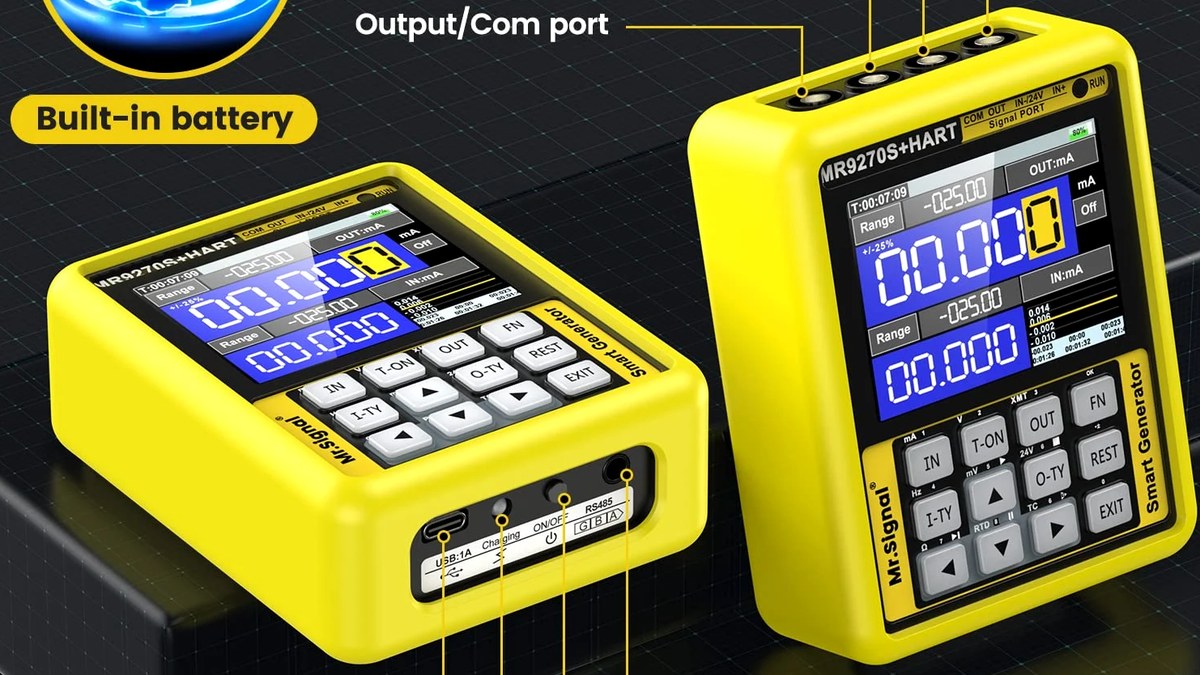
No. The MR9270S+ is only for supported process signals; it is not a mains tester and must never be connected to a 230V supply. Its 0–12V signal output and 24V loop function do not provide a CAT-rated mains measurement capability. Stop, isolate the equipment under site procedures, check the documentation and use a competent person with suitably rated test equipment.
The product page gives an explicit “no”
The live UK product page, checked on 19 July 2026, describes the MR9270S+ HART as a multifunction process signal generator. More importantly, its safety FAQ states that it is for signal testing and process calibration and should not be used as a mains voltage tester. That direct restriction settles the question; no menu choice, lead arrangement or accessory can override it.
The current MR9270S+ product information lists 0–24mA current signals, 0–12V voltage signals, −10 to 110mV, 0–9999Hz, Pt100, Cu50, common thermocouple types, resistance signals and a 24V loop output. These are process-instrumentation functions. HART and Modbus RTU support also relates to compatible process devices and arrangements, not to electrical-installation testing.
Why 0–12V output does not mean 230V measurement
A generated voltage range and a safe mains measurement rating answer different questions. “0–12V output” describes a supported low-level signal the instrument can produce. It does not state that an input can withstand, detect or safely measure 230V AC. Likewise, a 24V loop output is a source for an appropriate process loop; it is not a 24V measurement rating and does not create mains protection.
Mains test equipment must be suitable for the task, installation environment and possible transient energy, not merely display the expected nominal voltage. A CAT marking combines an installation category with a voltage rating for a defined use. The UK listing does not state a verified CAT rating for the MR9270S+, and it expressly excludes mains testing. Therefore, do not infer mains suitability from the screen range, physical sockets, supplied leads, rechargeable battery or the word “measure”.
There is also a language trap. UK electrical-safety guidance uses “low voltage” for systems that can still present lethal mains hazards, whereas instrumentation teams often speak informally of low-level process signals. Neither phrase makes 230V harmless. The relevant boundary is the manufacturer’s stated purpose, ratings and restrictions for the exact instrument.
Apply the UK electrical-safety principles
HSE guidance says electrical systems should, wherever possible, be worked on dead. It emphasises planned work, secure isolation that prevents inadvertent re-energisation, competent people and equipment suitable for the task. Its GS38 guidance addresses test equipment used on low-voltage electrical systems; that does not approve every handheld electrical instrument for mains use.
For a 230V circuit, proving dead is part of an authorised safe-isolation process performed by a competent person using appropriate equipment. The MR9270S+ must not be used to prove dead. It must also not be used for live fault-finding, supply identification, socket testing, protective-conductor checks or any other mains task.
This page deliberately gives no instructions for probe placement, terminal selection or taking a 230V reading. Live electrical testing is not a reasonable experiment with an unrated process calibrator.
What to do when mains may be present
If a conductor, terminal or panel could carry 230V, follow this stop decision:
- Stop and keep the MR9270S+ disconnected. Treat an unidentified circuit as potentially energised. Do not try a brief contact to discover what it is.
- Use the site’s authorised isolation and permit procedure. The supply and every relevant energy source must be identified, made safe and secured against re-energisation by people responsible for that work.
- Check the controlling documents. Use current circuit drawings, risk assessment, method statement, equipment instructions and the exact instrument manual. A generic online range table is not enough.
- Escalate to a competent person. They must decide what work is justified and select test equipment, probes and protective arrangements specifically rated and suitable for the installation.
- Do not substitute the signal generator. If the correct equipment or competence is unavailable, the work stops; a reading is not urgent enough to bypass the safety boundary.
If the MR9270S+ or its leads may already have contacted an unsupported source, stop using them. Keep the area controlled and have a competent person make the situation safe under the site procedure. Do not assume the instrument remains safe or serviceable merely because it powers up.
Keep process-signal work inside its boundary
The MR9270S+ may be considered only after the circuit has been positively identified as a supported process-signal arrangement and isolated from unintended energy. Before connection, consult both device manuals and the site drawing, then confirm mode, terminals, polarity, signal range and whether the loop already has power. The MR9270S+ HART manual guide explains how to navigate those documents without replacing them.
Typical in-scope planning may involve a confirmed 4–20mA loop, a supported 0–12V control signal, transmitter simulation or compatible HART/Modbus troubleshooting. “In scope” still does not mean automatically safe: plant movement, trips, stored energy and incorrect loop-power arrangements require control. Battery operation does not provide mains isolation or a safety category; the battery-life guide is only for planning supported process output work.
Do not claim intrinsic-safety, hazardous-area approval, UKAS calibration or mains certification for this product. The supplied certificate is not described as UKAS-accredited, and none of these unrelated claims would cancel the explicit mains prohibition.
No bench-tested MR9270S+ HART figures appear on this site; where this guide references the instrument, it relies on the published specification.
Any future controlled factory check must remain within documented process-signal limits. It may confirm revision-specific menus or terminal behaviour, but it cannot be used to explore mains tolerance or imply a CAT rating.
The safe conclusion
The MR9270S+ cannot test 230V mains. Keep it for documented process signals only. Where mains is present or even suspected, stop, isolate under the authorised procedure, consult the exact documents and place the task with a competent person using suitably rated equipment. If any rating, circuit identity or separation is uncertain, do not connect the MR9270S+.