MR9270S+ HART Review: What UK Buyers Should Know
A desk-based MR9270S+ HART review for UK buyers, covering published functions, limitations, kit, safety, support and points to verify before purchase.
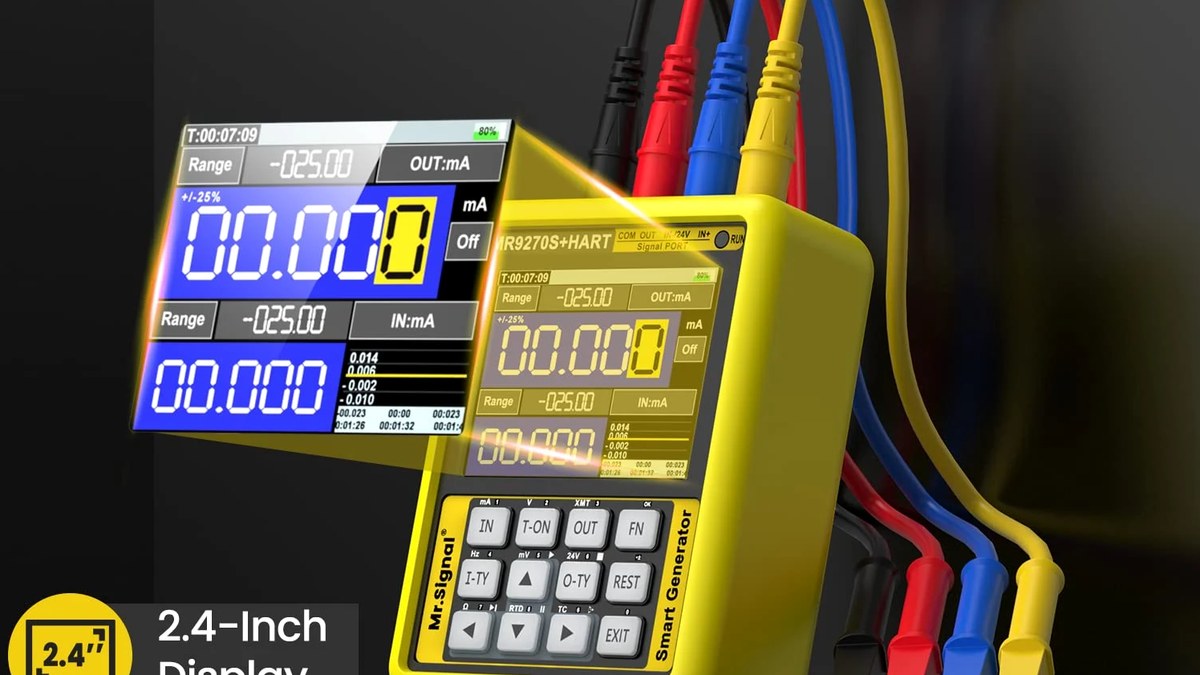
The MR9270S+ HART looks like a credible, feature-rich option for UK instrumentation technicians who need one portable tool for common process signals and compatible HART or Modbus RTU work. However, this is a desk-based assessment of published specifications and site information, not an independent hands-on test, so buyers should verify accuracy, compatibility and certification needs before ordering.
Review basis and short verdict
This assessment compares the published SEESII product information with the manufacturer’s MR9270-series instructions and established HART principles described by FieldComm Group. No unit was handled, connected or measured for this article. Consequently, the review can judge the stated feature set and buying proposition, but cannot confirm real-world accuracy, build quality, battery endurance or protocol interoperability.
On that evidence, the main attraction is breadth. The unit is described as generating, measuring and converting several signals while also offering HART-related testing and a USB-to-HART modem function. That could reduce the number of separate tools needed for planned loop checks and bench work. The main reservation is equally important: published feature breadth is not a substitute for verified uncertainty, calibration traceability or confirmed compatibility with a buyer’s exact devices.
The MR9270S+ HART product page displays a rating of 4.8 out of 5 based on 200 reviews. That is the site’s displayed aggregate, not an independently audited review sample. This article does not infer individual customer experiences or repeat unverified review claims.
What the published specification covers
The stated signal ranges are 0–24mA current, 0–12V voltage, −10 to 110mV and 0–9999Hz frequency. Published support also includes resistance, Pt100 and Cu50 RTDs, and multiple common thermocouple types. A 24V loop output is listed, alongside manual, preset, step and ramp output modes, signal conversion, engineering-value display, and a real-time curve or record view.
Those functions make the product most relevant to technicians who routinely investigate transmitters, PLC analogue channels, temperature inputs or process loops. Simultaneous input and output and nine configurable preset values are described in the manufacturer’s series documentation; they should be treated as documented capabilities rather than results demonstrated by this review. Buyers comparing individual ranges and functions can use the separate MR9270S+ specifications guide.
The hardware is listed at approximately 97 × 76 × 33mm and 189g, with a 320 × 240 TFT display and rechargeable lithium battery. SEESII states approximately 8–10 hours of working time during continuous 20mA output. Actual runtime will depend on operating mode, display use, battery age and condition, and has not been independently confirmed here.
How useful are HART and Modbus RTU?
FieldComm Group describes HART as two-way digital communication superimposed on a conventional 4–20mA signal. That distinction matters when assessing this model: HART support can help interrogate compatible smart instruments, but it does not automatically turn a signal generator into a universal communicator or full protocol analyser. Successful communication depends on the field device, software, loop arrangement, wiring, resistance and settings.
The same caution applies to Modbus RTU. The published support and supplied RS485 adapter may be useful in a compatible bench or troubleshooting setup, but model-specific registers, serial parameters and software requirements still need checking. Before purchase, obtain the manuals for the actual transmitter, controller or other endpoint and confirm that the intended workflow is supported at both ends.
Strengths suggested by the desk review
- Broad process-signal coverage: Current, voltage, millivolt, frequency, resistance and temperature functions address several common instrumentation tasks.
- Flexible output patterns: Preset, step and ramp modes could make repeatable input checks more convenient than manually changing every value.
- Communication options: HART-related functions and Modbus RTU support add scope beyond basic signal sourcing where the complete setup is compatible.
- Portable format: The published dimensions, weight, rechargeable battery and carry case suggest a field-friendly package, subject to hands-on confirmation.
- Useful supplied accessories: The listed package includes test leads, USB cable, RS485 adapter, manual, carry case and a certificate. The exact contents are broken down in the MR9270S+ kit contents guide.
Limitations and evidence gaps
The available site information does not establish UKAS-accredited calibration, traceability, a stated measurement uncertainty or hazardous-area approval for the supplied unit. The included “certificate” should therefore not be assumed to be a UKAS calibration certificate. Organisations governed by quality procedures should ask what documentation is supplied and decide whether separate accredited calibration is required.
There is also no basis here to claim an accuracy match with a particular competing instrument, resistance to drops or weather, or universal HART/Modbus compatibility. These are purchasing questions, not details to fill with assumptions.
A controlled future test should check source and measurement performance against suitable reference equipment, inspect operation across modes, assess runtime under defined conditions and document communication tests with named compatible devices. Until such results exist, the published specifications remain the evidence boundary.
UK price, delivery and after-sales points
At the time checked, the site displays £329.99 including VAT (£274.99 excluding VAT), free UK delivery, dispatch within 1–2 working days and delivery usually 1–3 working days after dispatch. It also states a 12-month warranty with UK support. Its returns policy permits a request within 30 days of receipt, subject to the stated conditions and statutory rights. Price, stock, delivery, warranty and return details can change, so recheck the product and policy pages before paying.
Who should consider it?
The MR9270S+ HART appears best suited to a buyer who values multi-signal capability, has identified the required ranges, and can validate the unit within an existing calibration or maintenance procedure. It may be less suitable where a job requires documented measurement uncertainty, accredited calibration, hazardous-area approval, a dedicated high-level HART communicator or guaranteed interoperability with a particular estate.
Before connecting, identify the circuit and consult both instrument manuals and the site procedure. Confirm the selected mode, terminals, polarity and loop-power arrangement, then follow the required isolation and permit process. The product is for process signal testing and calibration, not mains-voltage testing: never connect it to 230V mains or an unidentified or unsupported circuit.
Final buying judgement
As a published-specification proposition, the MR9270S+ HART combines an unusually wide set of process-signal and communication functions in a compact package. Its value depends less on the length of that feature list than on whether those functions match a defined task and the buyer’s evidence requirements. Review the current product details, price and support terms, confirm compatibility and required certification, and treat hands-on performance as unverified until controlled results are available.